The "zero" miracle on Nowolipki
Before people on Nowolipki began speaking about the apparitions of 1959 and 1970, there was an earlier, “zero” miracle: the simple fact that the Church of St. Augustine survived the war.
The church at 18 Nowolipki Street was located within the boundaries of the Warsaw Ghetto. When, after the Warsaw Ghetto Uprising, the Germans systematically destroyed its buildings, the church remained one of the most recognizable landmarks in a sea of ruins. Its tall, roughly 70-meter tower rose above the burned-out blocks of Muranow and became a marker of a place whose prewar layout had almost completely disappeared.
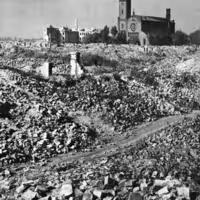
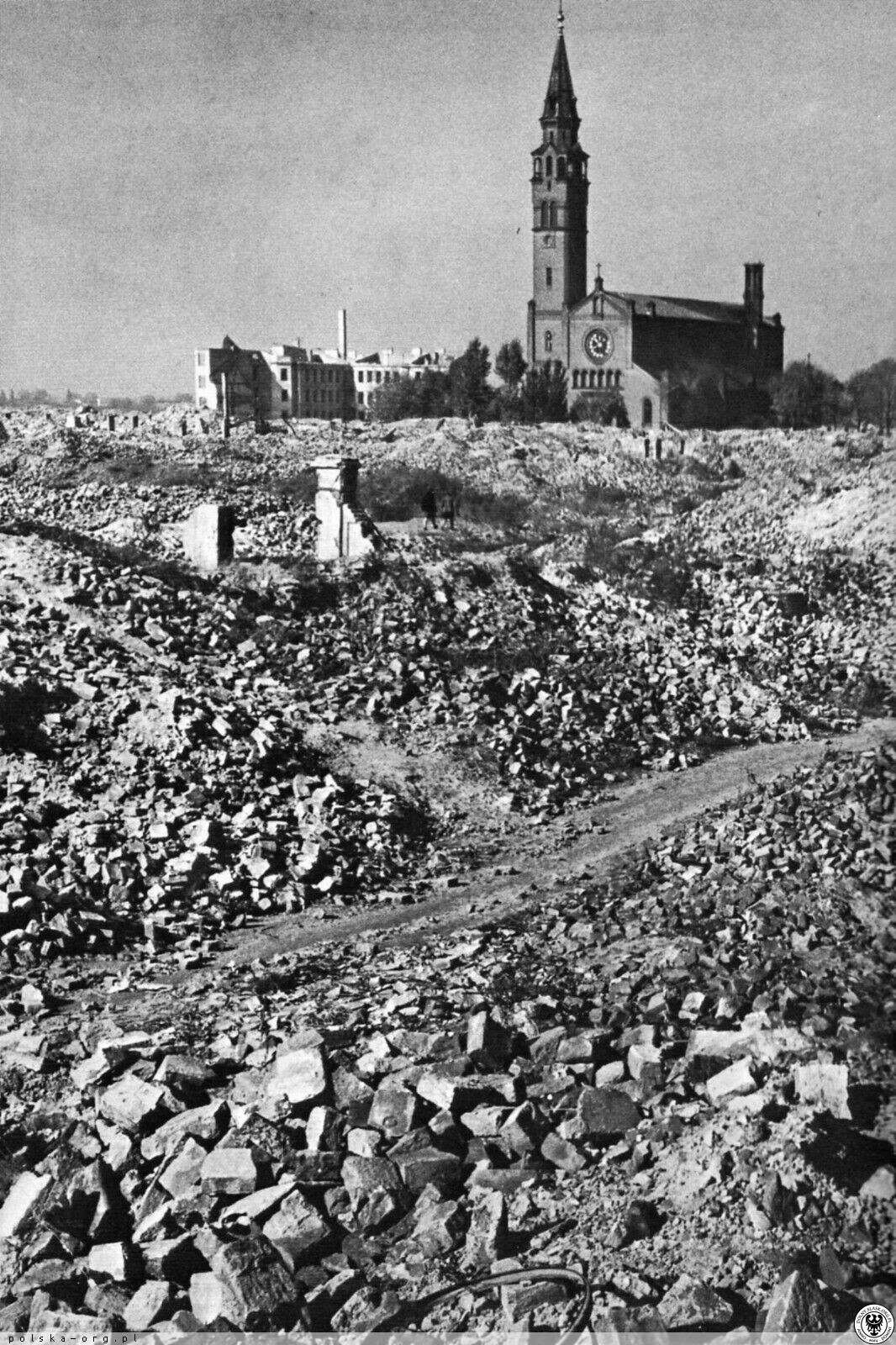
The most likely explanation for its survival is prosaic: the Germans did not treat the church only as a place of worship, but also as a useful building. After the liquidation of the ghetto, they used it as a warehouse for property looted from the Jewish population, and later as a stable. As long as the building served administrative and economic purposes, it did not share the fate of the surrounding tenement houses, which were dismantled or blown up after the Warsaw Ghetto Uprising.
Survival did not mean the church escaped damage. In 1944 the tower was damaged, and after the Warsaw Uprising the roof was set on fire. Even so, the main body of the church survived while the surrounding neighborhood was razed to the ground.
It was precisely this contrast that gave postwar photographs of the Church of St. Augustine their almost symbolic power. A solitary tower standing among ruins captured the imagination of the residents rebuilding Muranow. For some, it was above all testimony to the scale of the destruction of the ghetto; for others, it was a sign of providential survival.
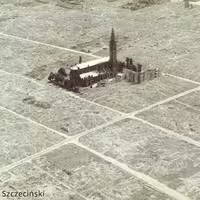
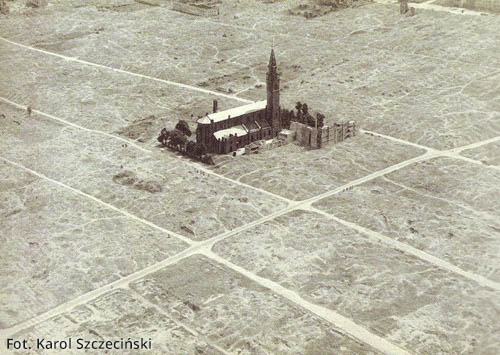
This earlier legend became the background for the later first miracle on Nowolipki. When people began gathering beneath the church in 1959, looking at the light reflected from the sphere below the cross, they were not looking at an ordinary building. They were looking at a church that had already been considered miraculously preserved.
The “zero” miracle was therefore not an apparition in the same sense as the events of 1959. It was rather the beginning of a story about the Church of St. Augustine as a place apart: a witness to the Holocaust, the ruins of Muranow, and the postwar memory of Nowolipki.