The Girls from Nowolipki and The Apple Tree of Paradise
Nowolipki has a special place in Polish culture: it is a real Warsaw address, but also a literary name for a whole neighborhood of poor streets, courtyards and tenement houses. Pola Gojawiczyńska set her best-known novel, Dziewczęta z Nowolipek - The Girls from Nowolipki - in this world. She wrote a story about girls from poor families coming of age, but she did not create a sentimental postcard of old Warsaw. Her Nowolipki is cramped, noisy and often cruel. It is a place the heroines want to escape from, but one that stays with them forever.
The novel first appeared in installments in Gazeta Polska in 1934-1935, and was published in book form in 1935. That same year Gojawiczyńska received the Literary Prize of the City of Warsaw for it. Two years later she published Rajska jabłoń - The Apple Tree of Paradise - a continuation of the heroines’ lives. Together they form Gojawiczyńska’s Warsaw diptych.
Pola Gojawiczyńska and Her Nowolipki
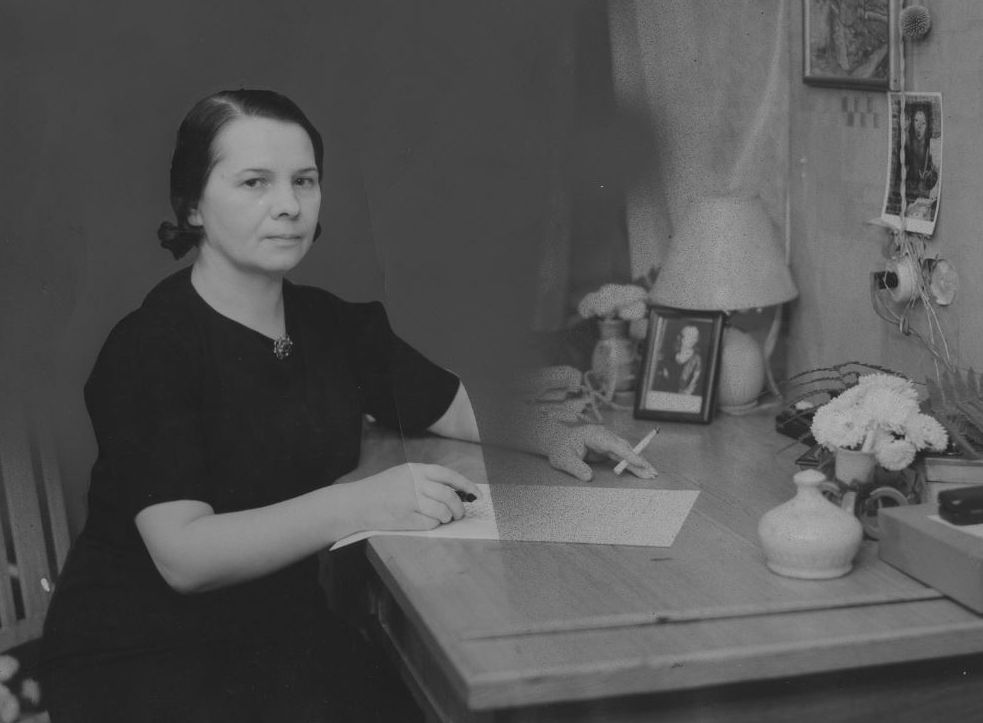
Gojawiczyńska knew this space from her own life, but her exact address needs caution. Biographical sources suggest that she grew up rather on Nowolipie than on Nowolipki Street itself; in an old address directory her father, the carpenter Jan Koźniewski, appears with a workshop at Nowolipie 18. The title Nowolipki should therefore be understood more broadly: as a literary name for the neighborhood from whose memories, courtyards, staircases, cramped flats and everyday conversations the world of the novel was made. But topography was not the only point. Nowolipki became a model of social enclosure: a world in which girls have imaginations larger than their possibilities, while their dreams keep colliding with poverty, dependence on men, exhausting work and war.
Nowolipki or Nowolipie?
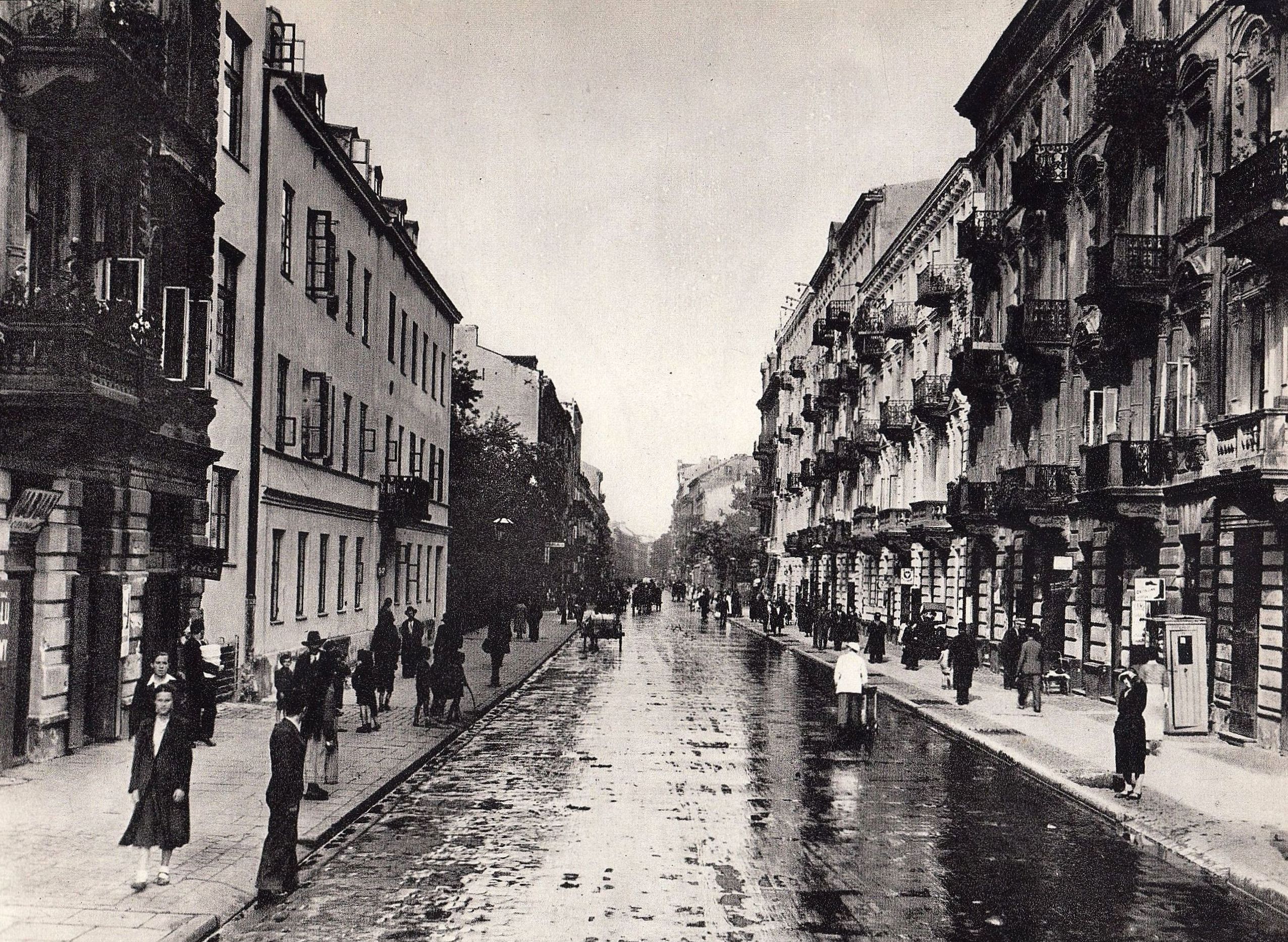
There is some confusion in biographies and popular articles. Some accounts say that Gojawiczyńska grew up “at Nowolipki” or that her father had a workshop “at Nowolipki”. Other sources are more precise and point to Nowolipie. The strongest address clue is the old directory entry: Jan Koźniewski, Nowolipie 18, carpentry workshop. The diagram of former plots and addresses on Nowolipki helps make sense of such old addresses.
This does not invalidate the novel’s title. Before the war, Nowolipki, Nowolipie, Dzielna, Mylna, Nalewki and nearby courtyards formed one close everyday world for residents. Even today this part of the old district is often called simply Nowolipki, even when people mean the wider area rather than one street only. The names Nowolipki and Nowolipie are also so similar that they are easily confused or distorted in popular writing. Dziewczęta z Nowolipek is therefore more a literary portrait of a neighborhood than a strict autobiographical address statement. It is worth keeping both things side by side: biographical Nowolipie and literary Nowolipki.
The Heroines
The main heroines in the screen adaptations are Bronka Mossakowska, Franka, Amelka Raczyńska and Kwiryna. Each has a different temperament. Bronka is trusting, hungry for love and especially vulnerable to hurt. Franka has literary ambitions and a need to move beyond her own environment. Amelka longs for comfort, beauty and social advancement. Kwiryna is the most practical: she holds on to the shop, work and concrete reality, but she too pays a high price for her choices.
The book contains more characters and nuances than the films. The adaptations usually focus on the four girls, leaving some sisters, acquaintances and neighbors on the margins. This is one reason why the screen versions of The Girls from Nowolipki are a tighter story of four lives rather than a full picture of the novel’s community.
What The Girls from Nowolipki Is About
The novel begins in youth. The girls finish elementary school, talk about the future and try to believe that their lives might unfold differently from the lives of their mothers, neighbors and women from the courtyard. They want to study, love, work, be admired and have a choice. But the world of Nowolipki is not kind to girls’ plans.
Gojawiczyńska describes their coming of age without sugar. Love can be a promise, but often turns into a transaction or a trap. Work gives independence, but rarely gives security. Social advancement is tempting, yet it demands compromises. War and poverty accelerate growing up, and a woman’s body becomes a field of other people’s expectations, judgments and violence.
The strength of the book lies in the fact that the author does not turn her heroines into saints or symbols. They are full of contradictions. They can be loyal and cruel, proud and helpless, tender and calculating. That is why, after so many years, they still feel alive.
The Apple Tree of Paradise, or Adulthood Without Illusions
The Apple Tree of Paradise follows the heroines into adulthood. It is no longer a book about girls’ dreams, but about the consequences of choices that often could not truly be made freely. Kwiryna runs a shop and builds her position. Amelka lives in a marriage to a wealthy pharmacist but does not find happiness there. Bronka faces loneliness and a returning love for Ignacy. Franka is essentially absent from the adult continuation - her fate closes in the first part.
The title’s apple tree sounds like a promise, but in this diptych promises are suspicious. The apple may mean temptation, desire, sin, knowledge, freedom or loss. In Gojawiczyńska’s work adulthood does not bring deliverance from Nowolipki. It brings the painful awareness that a poor street remains inside a person even when that person leaves it.
Screen Adaptations at a Glance
| Year | Title | Form | Director | Main cast |
|---|---|---|---|---|
| 1937 | Dziewczęta z Nowolipek | feature film | Józef Lejtes | Elżbieta Barszczewska, Jadwiga Andrzejewska, Tamara Wiszniewska, Anna Jaraczówna |
| 1970 | Dziewczęta z Nowolipek | four-part Television Theatre production | Stanisław Wohl | Elżbieta Kępińska, Emilia Krakowska, Zofia Kucówna, Ewa Wiśniewska |
| 1985 / released 1986 | Dziewczęta z Nowolipek | feature film | Barbara Sass | Maria Ciunelis, Izabela Drobotowicz-Orkisz, Ewa Kasprzyk, Marta Klubowicz |
| 1985 / released 1986 | Rajska jabłoń | feature film | Barbara Sass | Marta Klubowicz, Ewa Kasprzyk, Izabela Drobotowicz-Orkisz, Mariusz Dmochowski, Piotr Bajor |
The 1937 Adaptation
The first adaptation came very quickly, in 1937. Dziewczęta z Nowolipek was directed by Józef Lejtes, one of the most important figures in prewar Polish cinema. The screenplay was written by Lejtes and Stanisław Urbanowicz, and the film was produced by Parlo-film. It premiered on 26 October 1937. The film ran 97 minutes, was black and white, with cinematography by Seweryn Steinwurzel and Stanisław Lipiński, and music by Marian Neuteich and Roman Palester.
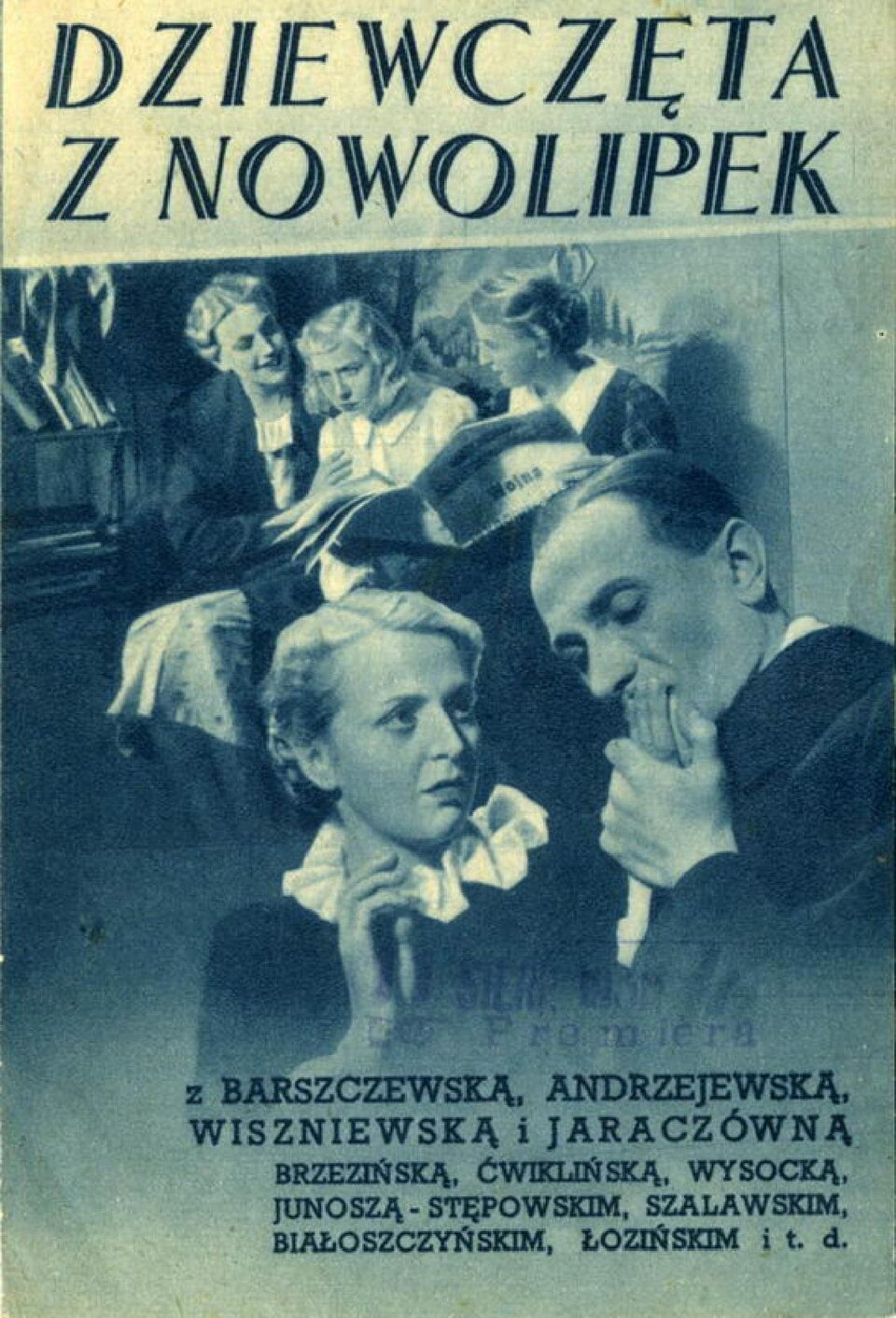
Main cast:
- Elżbieta Barszczewska - Bronka Mossakowska
- Jadwiga Andrzejewska - Franka
- Tamara Wiszniewska - Amelka Raczyńska
- Anna Jaraczówna - Kwiryna
- Stanisława Wysocka - Mossakowska
- Mieczysława Ćwiklińska - Raczyńska
- Kazimierz Junosza-Stępowski - Mossakowski
- Tadeusz Białoszczyński - Różycki
- Stefan Hnydziński - Michałowski
- Andrzej Szalawski - Ignaś
- Władysław Grabowski - the pharmacist
- Hanna Karwowska - Alisia
Lejtes’s film was an event. Polish cinema in the 1930s often escaped into comedies, romances and salon worlds, while here the camera went down into the courtyard, basement flats, kitchens and poor rooms. The National Film Archive emphasizes that Gojawiczyńska actively participated in work on the adaptation, strengthening the film’s social realism.
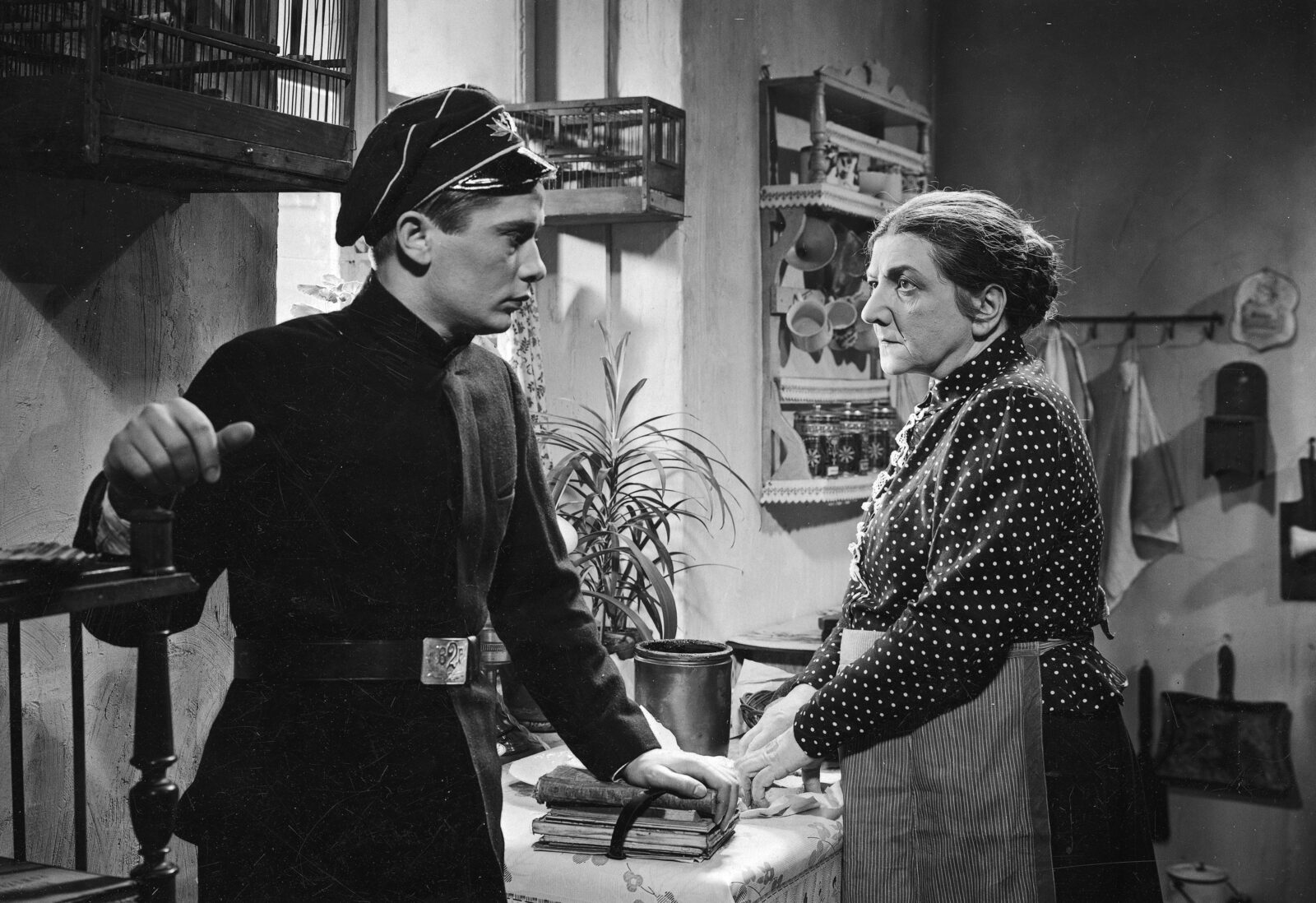
Interesting facts about the first adaptation:
- Anna Jaraczówna, who played Kwiryna, was the daughter of Stefan Jaracz. The film became one of her most important screen appearances.
- The adaptation clearly simplified the novel’s structure: the sisters Janka and Cechna disappeared, and some supporting characters moved into the background.
- The film emphasized Bronka and Franka more strongly than Kwiryna, although in the book Kwiryna is one of the most vivid figures.
- In 1937 the film press even wrote about a dispute over casting: according to information cited by the National Film Archive repository, a lawyer for one actor was said to have acted against Parlofilm after a role was recast.
- Critics received the film exceptionally well. Later accounts often describe it as one of the major achievements of interwar Polish cinema.
The 1970 Television Theatre Version
The second adaptation took the form of a four-part Television Theatre production. Dziewczęta z Nowolipek was directed in 1970 by Stanisław Wohl, adapted by Irena Bołtuć, and produced for television by Barbara Borys-Damięcka. The set design was created by Xymena Zaniewska and Mariusz Chwedczuk. Although the series used the title of the first novel, it also covered the heroines’ later lives from The Apple Tree of Paradise.
The cycle was arranged as portraits: each part focused on one heroine. TVP materials list the episode titles Frania, Kwiryna, Bronka and Amelka. This mattered, because television could do what a feature film usually cannot: divide attention among the heroines and give each her own rhythm.
Main cast:
- Elżbieta Kępińska - Frania / Franka
- Emilia Krakowska - Kwiryna
- Zofia Kucówna - Bronka
- Ewa Wiśniewska - Amelka
- Mieczysław Milecki - the Professor
- Henryk Boukołowski - Roman
- Zbigniew Zapasiewicz - Ignaś
- Elżbieta Wieczorkowska - Mrs. Raczyńska
- Henryk Borowski - the pharmacist
- Krzysztof Kowalewski - the assistant pharmacist
Interesting facts about the television version:
- The four-part structure resembles reading the novel chapter by chapter. Instead of one central heroine, the viewer receives four points of view.
- In Frania, the emphasis falls on literary ambition and unhappy love for the professor. In Bronka, loneliness, Ignacy’s return and the drama of emotional dependence become central.
- Contemporary TVP descriptions stress that this was an intimate psychological drama rather than a spectacular reconstruction of old Warsaw.
- Later accounts often identify this version as the second adaptation of the novel, between Lejtes’s film and Barbara Sass’s film.
Barbara Sass: The Girls from Nowolipki from 1985
After nearly half a century Barbara Sass returned to Gojawiczyńska. Her Dziewczęta z Nowolipek was made in 1985 and premiered in cinemas on 14 April 1986. The film runs 86 minutes. Sass wrote the screenplay herself. The cinematography was by Wiesław Zdort, the music by Zbigniew Raj, and the film was produced by Studio Filmowe Kadr and Telewizja Polska.
Main cast:
- Maria Ciunelis - Franka
- Izabela Drobotowicz-Orkisz - Bronka Mossakowska
- Ewa Kasprzyk - Kwiryna
- Marta Klubowicz - Amelka Raczyńska
- Piotr Bajor - Roman
- Krzysztof Kolberger - Ignacy
- Iga Cembrzyńska - Mrs. Raczyńska, Amelka’s mother
- Jan Nowicki - Różycki
- Olgierd Łukaszewicz - the actor
- Zdzisław Wardejn - Michałowski
- Stanisław Biczysko - Mietek Mossakowski
- Franciszek Pieczka - Mossakowski, Bronka’s father
- Lidia Korsakówna - Mossakowska, Bronka’s mother
- Andrzej Łapicki - the professor
- Wanda Koczeska - the professor’s wife
- Dorota Stalińska - Helena
Sass told the story differently from Lejtes. Her film is more bodily, psychologically sharper and less inclined to romanticize prewar poverty. It carries the experience of a director who consistently portrayed women facing social, sexual and economic violence.
Interesting facts about Sass’s film:
- It was shot in Warsaw and Konstancin-Jeziorna.
- The film was part of a larger plan: Sass also made The Apple Tree of Paradise, the continuation of the story.
- In international descriptions the film appears as The Girls of Nowolipki and The Girls of Nowolipki Street.
- The cast brought together young actresses with a powerful supporting ensemble: Pieczka, Łapicki, Nowicki, Jędrusik, Cembrzyńska and Dorota Stalińska.
Barbara Sass’s The Apple Tree of Paradise
Rajska jabłoń was also made in 1985 and premiered on 14 April 1986. It is the continuation of Dziewczęta z Nowolipek, based on the second part of Gojawiczyńska’s diptych. The film runs about 110 minutes. Barbara Sass again directed and wrote the screenplay, Wiesław Zdort shot the film, Zbigniew Raj composed the music, and the production was prepared by Telewizja Polska and Zespół Filmowy Kadr.
Main cast:
- Marta Klubowicz - Amelka Raczyńska
- Ewa Kasprzyk - Kwiryna
- Izabela Drobotowicz-Orkisz - Bronka Mossakowska
- Mariusz Dmochowski - Filip, the pharmacist and Amelka’s husband
- Piotr Bajor - Roman, Kwiryna’s husband
- Krzysztof Kolberger - Ignacy
- Jan Englert - Jan Cichocki / assistant pharmacist
- Iga Cembrzyńska - Raczyńska, Amelka’s mother
- Anna Romantowska - Magdalena
- Zofia Czerwińska - Kwiryna’s aunt
- Henryk Machalica - the prosecutor
- Marek Bargiełowski - Amelka’s defense lawyer
- Jan Łopuszniak - the judge
- Jadwiga Polanowska - Katarzyna
There are no more school conversations and first enchantments in this part. There is marriage, business, affair, illness, trial, betrayal and loneliness. Amelka lives with a wealthy pharmacist, but prosperity does not bring her happiness. Kwiryna runs a shop with Roman, tightening her grip on her small kingdom. Bronka tries once more to believe in her old love for Ignacy. Each of them, in her own way, pays the price of advancement, desire and disappointment.
Interesting facts about The Apple Tree of Paradise:
- It was shot in Warsaw and Pruszków.
- The international title is The Apple Tree of Paradise.
- In Barbara Sass’s cinema the apple returned as a meaningful prop: a sign of temptation, knowledge, female choice and the price paid for crossing a prohibition.
- The film is a rare Polish case of a literary continuation made immediately as the second part of a screen diptych.
Why This Story Returned to the Screen
The Girls from Nowolipki returned because every era could find something of its own in it. In 1937 it meant, above all, a break from salon cinema and a turn toward social realism. Television in 1970 saw material for intimate psychological portraits. Barbara Sass in the 1980s drew out Gojawiczyńska’s female anger, dependence and hunger for freedom.
For a site devoted to Nowolipki, the diptych matters for another reason as well. It shows that a street can become more than an address. It can become biography, fate, stigma, memory and language. Gojawiczyńska did not describe Nowolipki as decoration. She described it as a force that shapes people.
That is why the title girls, although they belong to a world more than a century old, are not only characters from an old novel. They are part of Warsaw’s memory, in which great history most often began in a cramped courtyard.
See Also
- History of Nowolipki Street
- Key stories of Nowolipki
- Former plots and addresses on Nowolipki
- Map of interesting places on Nowolipki
Sources
- Culture.pl - Pola Gojawiczyńska
- National Library - 120th anniversary of Pola Gojawiczyńska’s birth
- Mazovia.pl - Dziewczyna z Nowolipek
- Cyfrowe Mazowsze - address directory entry for Jan Koźniewski
- Polish Film Academy - Dziewczęta z Nowolipek (1937)
- FINA - Dziewczęta z Nowolipek
- Digital Repository of the National Film Archive - Dziewczęta z Nowolipek
- Polish Film Academy - Nasz Iluzjon: Dziewczęta z Nowolipek
- TVP - Television Theatre: Dziewczęta z Nowolipek - Frania
- TVP - Television Theatre: Dziewczęta z Nowolipek. Bronka
- Association of Polish Filmmakers - Dziewczęta z Nowolipek (1985)
- Filmweb - Dziewczęta z Nowolipek (1985)
- Filmweb - Rajska jabłoń (1985)
- Polish Film Festival - Dziewczęta z Nowolipek - Rajska jabłoń
- Polish Film Academy - Barbara Sass
- Wikimedia Commons - Pola Gojawiczyńska.jpg
- Wikimedia Commons - Ulica Nowolipki 1935.jpg
- Wikimedia Commons - Dziewczeta z Nowolipek 1937.jpg
- Wikimedia Commons - Dziewczęta z Nowolipek (1).pdf


