Nowolipki Street
Nowolipki is a street in Warsaw whose history leads from an old field road, through the dense prewar northern district and the Warsaw Ghetto, to postwar Muranow built on the ruins. This site helps you find the former layout of the street, places of memory, archival photographs and stories of people connected with Nowolipki.
Start with the map, former addresses and key stories, then continue below with the chronological history of the street.
- Map of interesting places on Nowolipki
- Former plots and addresses on Nowolipki
- Key stories of Nowolipki
- People connected with Nowolipki
Street history
Nowolipki Street was laid out after 1624 as a former field road on land belonging to the Bridgettine estate known as Nowe Lipie. It ran westward from Nalewki Street. At first it was very sparsely built up: as late as 1762, wooden houses stood only near its beginning. Farther west there were mainly gardens, which gave rise to the unofficial name “Ogrodniki” - the gardeners.
The present name “Nowolipki” was approved in 1770, although the form “Nowolipska” was also used for some time. In the same year, on the initiative of the surveyor Maciej Deutsch, the street was regulated and extended to Wolnosc Street.
The 18th century
From 1770, a municipal cart depot stood near the junction with Nalewki Street - a shed for carts used to remove waste, designed by Stanislaw Zawadzki or Jakub Fontana. In 1775, on the neighboring plot, the palace of Konstancja Hilzen, wife of the Minsk voivode Jan August Hylzen, was enlarged. After 1784, a small palace for Jan Poltz was built at number 7; before 1792 it became the property of Stanislaw Soltyk.
The 19th century
During the period of the Congress Kingdom of Poland, the eastern section of the street gained a more representative character. The cart depot was converted into barracks for the Crown Guard Artillery, and after 1795 the Hilzen palace was taken over by Tadeusz Mostowski, minister of internal affairs of the Duchy of Warsaw. In 1824 Antonio Corazzi rebuilt the Mostowski Palace as the seat of the Government Commission for Internal and Religious Affairs.
At number 33, before 1819, Warsaw’s first wax foundry, owned by Karol Schultz, was already operating. In 1835 the Fourth Fire Brigade Division took over the site of the former cart depot, where a telegraph tower was also built.
In 1840-1843, the building of the Second Boys’ Gymnasium was erected at numbers 11/15; for a time it housed the Noble Institute. Maria Sklodowska-Curie lived in this building as a child after her family moved from 16 Freta Street in 1868. The Sklodowski family left it in 1873.
The Soltyk palace, earlier the seat of the Insurance Directorate, housed the city’s first permanent Insurance and Savings Office in 1843. After 1864 a mosque was arranged there, and before 1868 it housed the printing house of Jozef Unger, publisher of “Tygodnik Ilustrowany” and “Wedrowiec”.
After 1840, investment stopped for about 25 years. Gas lighting appeared around 1860, and Karmelicka Street was extended in 1863. The years 1875-1888 brought chaotic speculative development, although some tenement houses already had a higher architectural standard.
The turn of the 20th century
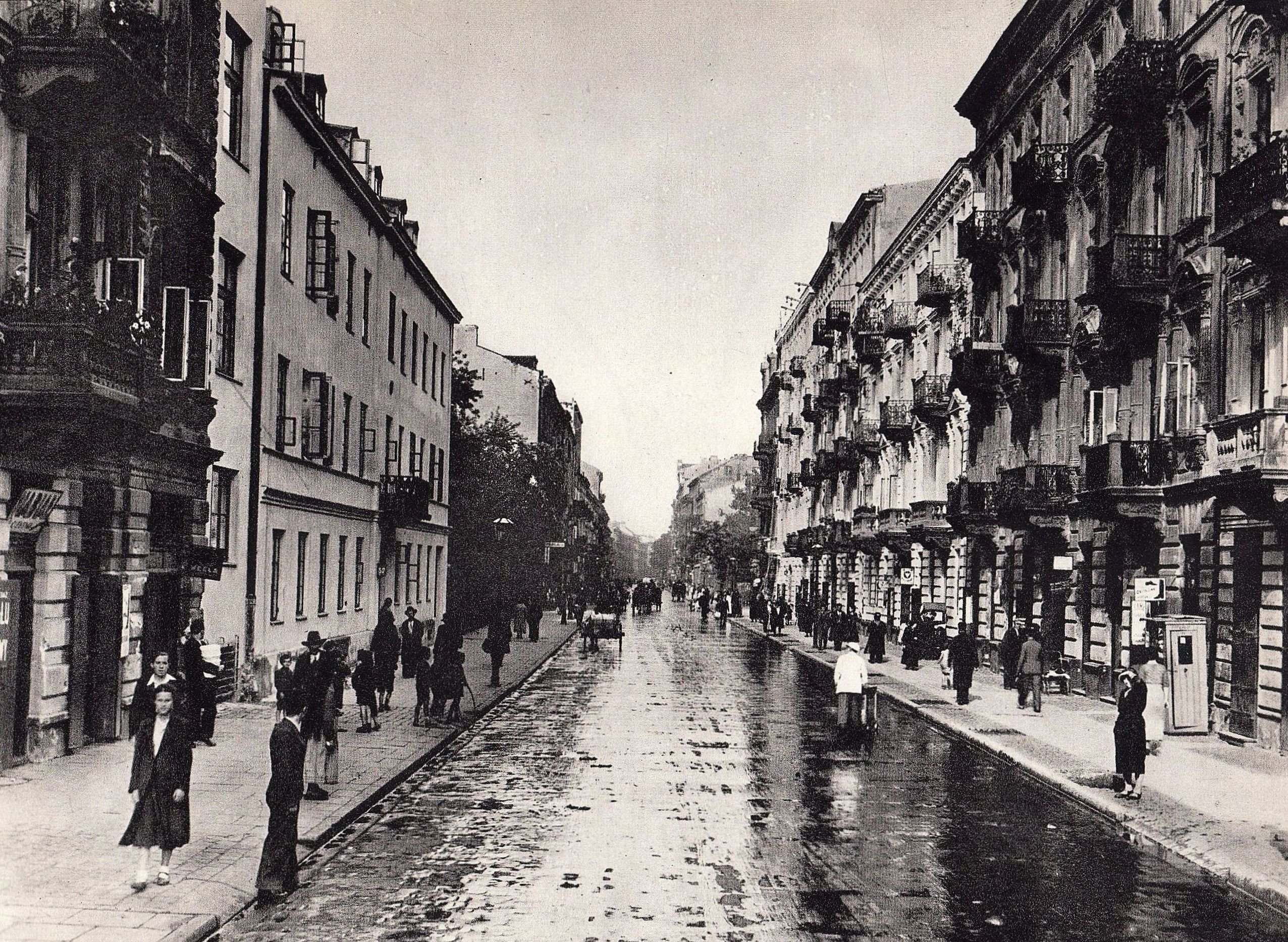
Nowolipki gained several distinctive buildings, including the neo-Gothic tenement house of Eugeniusz Torzewski at number 51, with red brick and a small tower. Similar styling appeared in the houses at numbers 41 and 43. In 1892-1896 the Church of St. Augustine was built, with a 70-meter tower.
Around 1911, a modern tenement house was built for Karol Piltz. Until 1939 many workshops and factories operated along the street, including a safe factory, a tannery and a bicycle workshop.
In 1914 Joseph Rotblat, later a Nobel Peace Prize laureate, moved into the tenement house at number 53; since 2018 a nearby square has carried his name. In the interwar period the building housed the Third Police Station of the Polish State Police. At number 7 were the offices of “Nasz Przeglad” and the children’s paper “Maly Przeglad”, founded by Janusz Korczak.
World War II
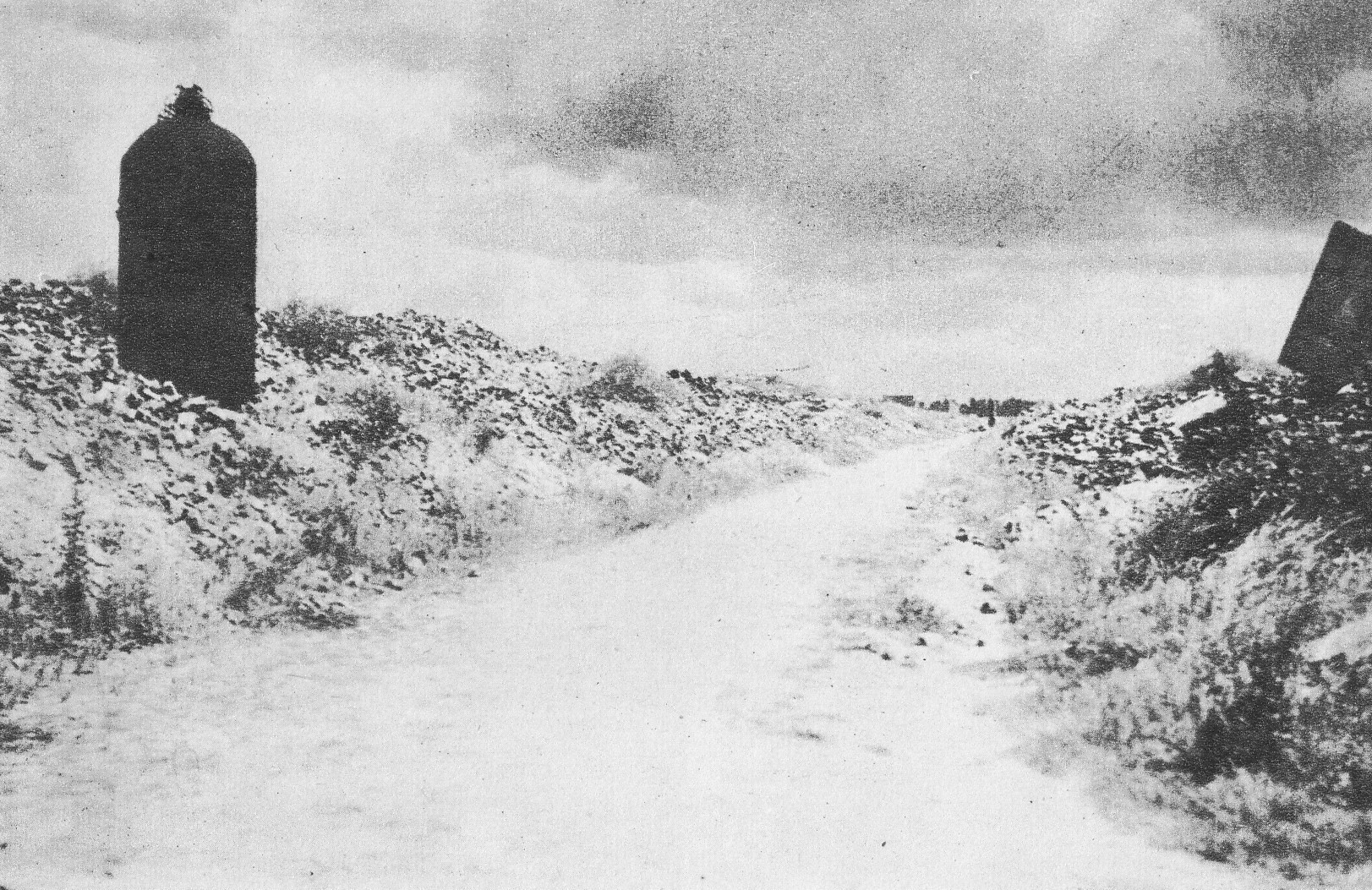
In 1939 the school building at number 11 and the wings of the Mostowski Palace were damaged. In November 1940 Nowolipki was included within the Warsaw Ghetto. After the deportation action of 1942, its western end was excluded from the ghetto. During the Warsaw Ghetto Uprising, German forces destroyed most of the built-up area. Only the Church of St. Augustine survived.
In the cellars of the Ber Borochov school at number 68, parts of the Ringelblum Archive were hidden in August 1942 and February 1943. The archive was created by the Oneg Shabbat group led by Emanuel Ringelblum. The first part was found after the war on September 18, 1946, and the second on December 1, 1950.
The Warsaw Uprising of 1944 brought further destruction: among other buildings, the Fire Brigade barracks and the Mostowski Palace burned.
The postwar period
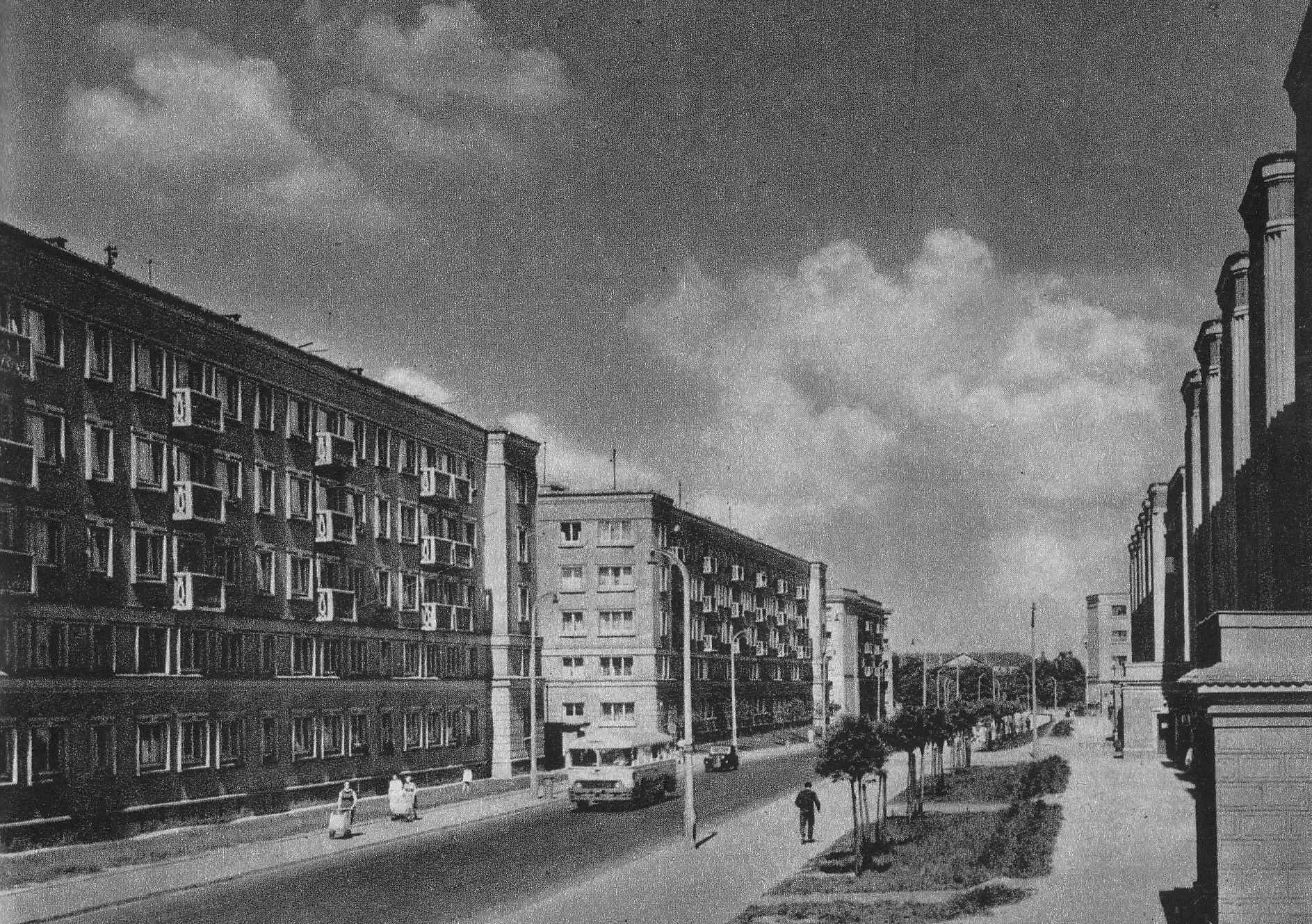
After the war, the street was shortened to Przejazd Street, now General Wladyslaw Anders Street, and its cobbled surface was removed. The numbering of plots also changed: postwar house numbers are completely different from the prewar ones, so old addresses cannot be matched directly with today’s. A diagram of former plots and addresses on Nowolipki helps make sense of that older layout. At number 20, outbuildings of a former tenement house of the Warsaw Jewish Community survived.
The new Muranow housing estate was built directly on the rubble. Some buildings stand on small hills formed from buried ruins. In this postwar setting, the legend of the Church of St. Augustine later grew through stories of the first miracle on Nowolipki in 1959 and the second miracle on Nowolipki in 1970.
Today
In 2021, a memorial marking the place where the first part of the Ringelblum Archive was found was unveiled in the square between the blocks at Nowolipki 28 and 30. It was designed by Lukasz Mieszkowski and Marcin Urbanek.
See Also
Diagram of former plots and addresses on Nowolipki